
Consortium Leadership
The People Behind the Work
One Executive Director, three division leads. Each division runs its own shop and answers for its own standards; the Director keeps them pointed at the same problem. Together they are the Consortium’s working core on FlyForward and everything that follows it.

Dr. Rowan Ashby (they/them)
Executive Director · The Santa Noeta Consortium
Dr. Ashby convened the Consortium and runs it from a deliberate half-step back. They did not come up through research, design, or technology — their background is in regional economic development and a community foundation, where they spent two decades learning how money, institutions, and good intentions actually move through a valley. That is the point of them. They hold the Consortium’s mission and its budget so that Vance, Reyes, and Chen can hold their own standards, and they stay out of the divisions’ technical lanes on purpose.
Their value is connective rather than directive. When the three divisions pull in different directions — and on a project like FlyForward they will — Ashby’s job is to keep them solving the same problem, and to keep that problem the community’s and not the Consortium’s. They hold one standing rule no one has learned to test: no division presents to a funder without a community partner in the room. It is unglamorous work, and they prefer it that way.
“I don’t run the research, the design, or the technology. My one job is making sure all three are still solving the same problem — and that it’s still the community’s problem, not ours.”
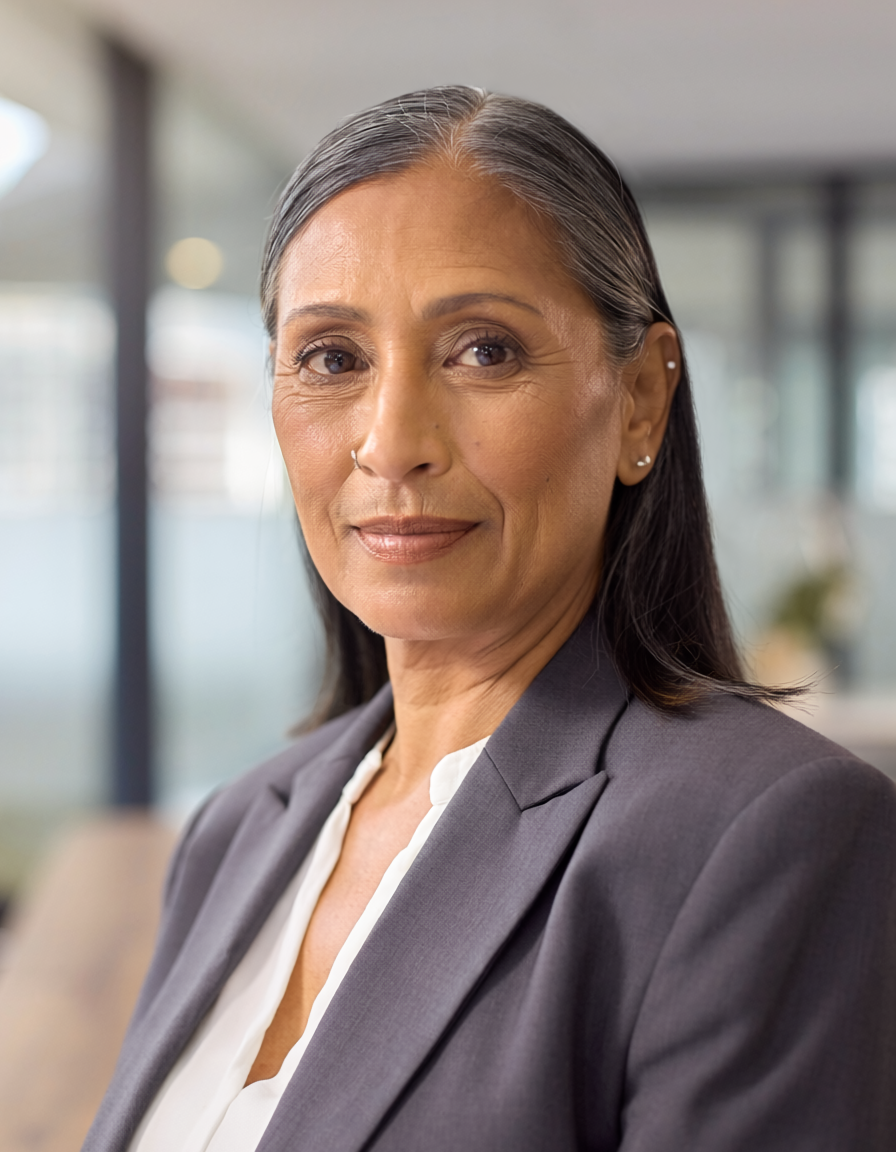
Dr. Elena Vance
Director of Research · Santa Noeta Research (SNR)
Dr. Vance joined the Consortium after fifteen years in applied educational research, most recently with a regional workforce collaborative working on healthcare and trades transitions. Before that she spent a decade at Santa Noeta College, where she chaired IT and ran institutional effectiveness — which is where she learned how a good idea dies on contact with a master schedule. Her work centers on the gap between what a training program claims to do and what its graduates can actually demonstrate on the job. She is direct about what research is for: not decoration for decisions already made, but the thing that tells you whether a decision was any good before you spend two years finding out the hard way.
“An elegant solution to the wrong problem is an expensive mistake. Show me the data first.”

Marc Reyes, CPT
Lead Performance Architect · Santa Noeta Design & Performance Improvement (SNDPI)
Marc Reyes has spent twenty years in performance improvement across manufacturing, healthcare, and workforce development. He holds the Certified Performance Technologist designation from the International Society for Performance Improvement, which he will mention exactly once in any given meeting and then get on with the work. His first question is almost never about the course. It is about whether a course was ever the answer — whether the problem in front of him is a training problem at all, or a process, tooling, or incentive problem wearing a training problem’s clothes.
“Was this even a training problem?”

Chloe Chen
Director of Innovations · Santa Noeta Innovations (SNI)
Chloe Chen came to the Consortium from product development — three years building AI-assisted tools for healthcare workflow optimization, then two years auditing what actually got used in the field and why. That second job shaped how she works: the field is where assumptions die, and the faster you get there, the less time you waste building tools for a user who doesn’t exist. She currently leads FlyForward’s AI field-assistant development, and she is unsentimental about the technology — the model is rarely the bottleneck; the way you’ve framed the problem to it usually is.
“The tech isn’t the problem — our prompt architecture is.”